
The Rise of AI-Crypto & “AI Tokens”: A beginner-friendly, research-backed guide

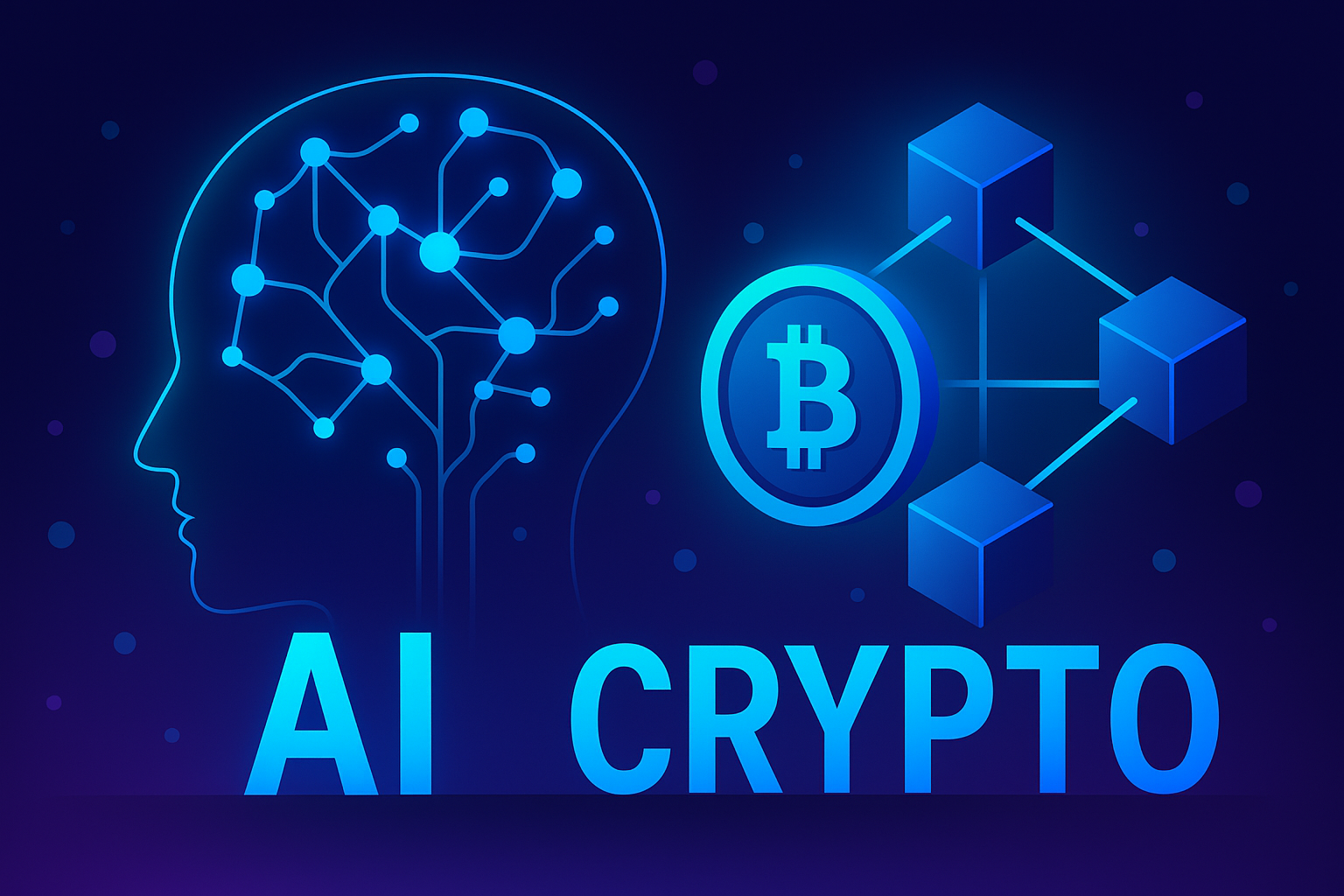
AI and crypto are converging. Projects today are using blockchain tokens to pay for AI compute, buy and sell datasets, reward model builders, and govern decentralized AI marketplaces. This combination promises new business models (and new risks), so understanding how AI tokens work is useful whether you’re a content writer, developer, or small business owner. Recent industry reports show this convergence is a major trend for 2025.
What is an “AI token”? — a plain analogy
Think of an AI token like a ticket at a digital services bazaar:
- The bazaar = a decentralized AI marketplace (data, models, or compute).
- The ticket (token) = currency, membership pass, and sometimes a vote in how the bazaar runs.
- The stalls = services such as renting GPU time, buying a trained model’s inference, or licensing a cleaned dataset.
Tokens are used to pay, incentivize, and govern the network — and sometimes to stake on the quality or accuracy of contributions. This simple mental model helps you evaluate whether a token is serving a real purpose or just being marketed as one. (More on evaluation later.)
Why combine AI with blockchain? The practical problems it tries to solve
Centralized AI systems (big cloud providers and a handful of companies) create several practical problems:
- Data monopolies & fairness: valuable datasets are controlled centrally and monetized by a few players.
- Trust & provenance: it can be hard to verify who trained a model, what data was used, or whether outputs are auditable.
- Access & cost: small teams struggle to access high-quality data, models, or affordable compute.
Blockchain + token models try to tackle these by enabling decentralized data marketplaces, traceable usage via on-chain records, and market incentives for data providers, GPU renters, and model creators. Industry research and trend reports identify this convergence as a key theme for 2025.
Real projects to study (what they actually do)
Below are representative projects that illustrate the main use cases. These are good starting points for deeper research.
- SingularityNET (AGIX) — a decentralized marketplace for AI services where developers publish models and users pay tokens to access them.
- Fetch.ai (FET) — focuses on autonomous agents that transact and coordinate economic activity; tokens pay for agent services and access.
- Ocean Protocol (OCEAN) — builds data marketplaces where datasets and “datatokens” enable buying and selling data while offering privacy-preserving patterns like compute-to-data.
- Render (RNDR) — tokenizes GPU/rendering compute so creators can rent decentralized GPU power — useful for AI training and expensive inference tasks.
- Numerai (NMR) — a hedge-fund / tournament model where data scientists stake tokens on model submissions and get rewarded for performance — an example of token incentives for model quality.
Each project shows a different way tokens can add utility — study one in depth rather than skimming many.
How AI tokens are actually used — 5 practical use cases
- Data marketplaces: Data owners mint datatokens and sell dataset access; buyers pay tokens and can run private compute without exposing raw data.
- Compute sharing (GPU): Providers rent GPU time and receive tokens; consumers pay tokens for rendering or model inference.
- Model inference marketplaces: Developers host models and users pay per inference with tokens, creating a pay-as-you-go model for AI services.
- Agent economies: Autonomous agents perform tasks (e.g., data discovery, trade negotiation) and use tokens to transact and coordinate.
- Performance-staking & research incentives: Contributors stake tokens on model outputs or predictions and earn rewards for accuracy, aligning incentives toward quality.
Risks & limitations — what to watch (so your readers don’t get burned)
- Speculation vs. utility: Many tokens are marketed as “AI tokens” but have limited real usage beyond trading. Look for real on-chain activity and product usage.
- Regulatory uncertainty: Token classifications vary by jurisdiction; regulatory changes can affect token value and operations.
- Privacy & compliance: Putting data or model metadata on chain risks privacy issues; solutions exist (compute-to-data, MPC) but are complex.
- Centralization traps: Some projects appear “decentralized” but still rely on centralized infrastructure or dominant stakeholders. Evaluate governance participation.
- Security and smart contract risk: Marketplaces and token contracts must be audited; hacks and economic exploits are real.
Being candid about these risks will make your post trustworthy and practical.
A research checklist — how to evaluate an AI token project (copy this into your post as a downloadable checklist)
Treat a token project like a small business you’re evaluating:
- Token utility: What exact job does the token perform? (payments, staking, governance, access)
- Product traction: Are there real users, datasets, compute jobs, or model calls? Check marketplace metrics and GitHub activity.
- On-chain metrics: Look for active addresses, token flow, and usage rather than just market cap.
- Team & partners: Do they have credible AI/blockchain experience and enterprise partners?
- Tokenomics: Total supply, vesting schedules, inflation — could tokens be dumped by insiders?
- Security: Smart contract audits, bug bounties, and incident history.
- Governance & community: Active DAO proposals, voting turnout, and community engagement.
- Legal clarity: Any public statements on compliance? Are they listed on reputable exchanges?
Use this checklist to make each blog post actionable: teach readers to do one small verification step themselves.
Final Thoughts
AI tokens are an exciting and practical attempt to decentralize parts of the AI stack — data, compute, models, and agent coordination. The field is young and fast-moving: projects show real utility in 2024–2025, but many tokens remain speculative. If you want to learn more, pick one project, run the mini experiment above, and write a short how-to blog post about it — readers love practical case studies.
I do not even understand how I ended up here, but I assumed this publish used to be great lüleburgaz nakliye fiyatları
The articulation of ideas here is exceptionally polished, reflecting both depth of knowledge and professional communication skills.
Very well presented. Every quote was awesome and thanks for sharing the content. Keep sharing and keep motivating others.